
Interpretation of China’s 15th Five-Year Plan for Next-Generation Batteries: Strong Alignment with TOP Technology’s R&D Strategy
Introduction
On September 28, seven government departments, including the Ministry of Industry and Information Technology (MIIT), jointly issued the 15th Five-Year Plan for the Development of the Next-Generation Battery Industry. This marks China’s first national five-year plan dedicated specifically to the next-generation battery industry. The plan sets out the goal of achieving initial large-scale applications of all-solid-state batteries by 2030 and identifies high-voltage, high-stability manganese-based cathodes, silicon-based anodes with high initial Coulombic efficiency and low expansion, and high-performance polymer composite solid-state electrolytes as key areas for technological breakthroughs.
A closer examination of the plan reveals a strong alignment between China’s national strategic priorities and the technical roadmap that TOP Technology has consistently pursued over the past several years.
1. National Strategy: Where Is the Battery Industry Headed?
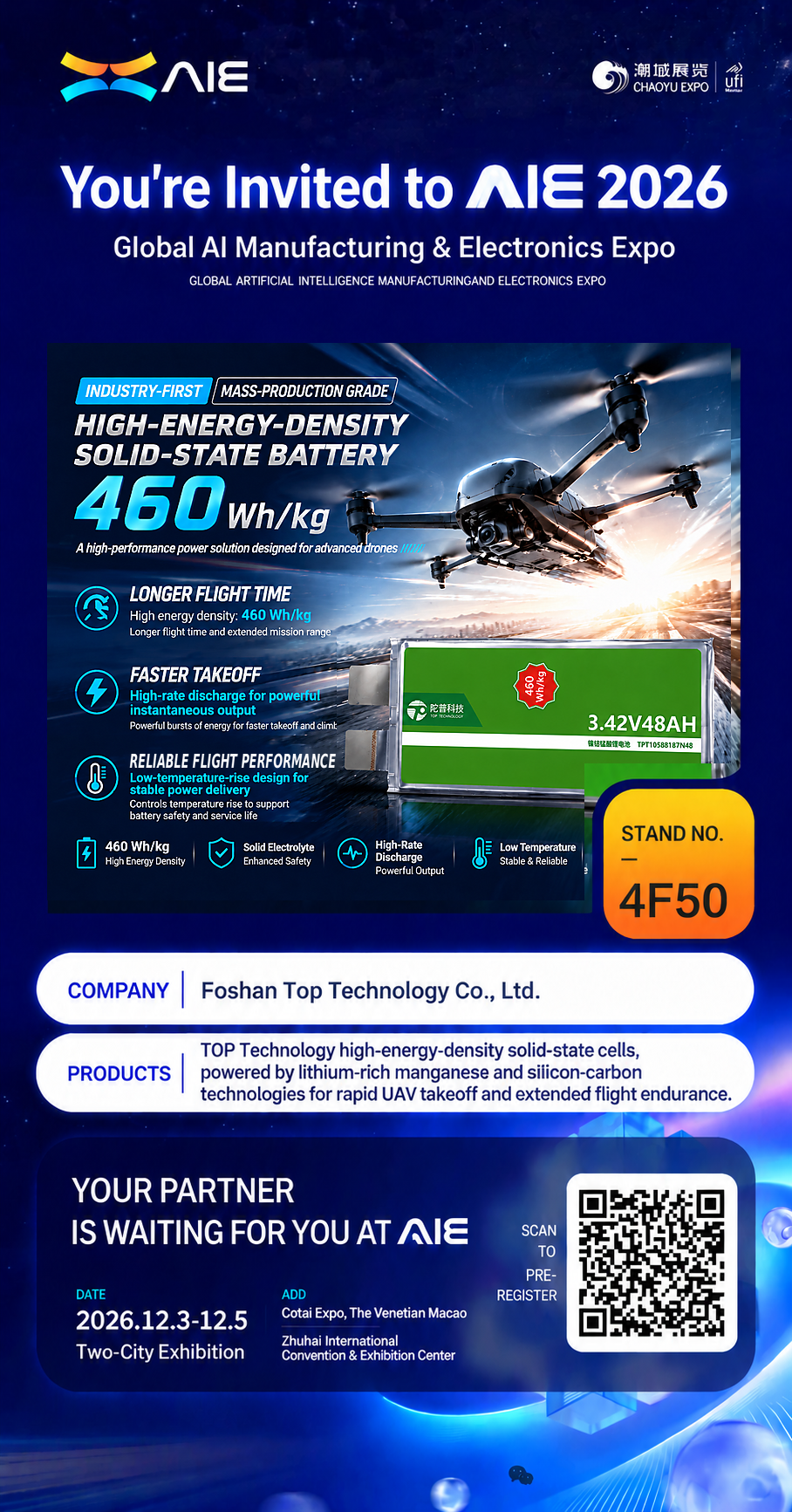
China’s first national five-year plan dedicated specifically to the next-generation battery industry has been jointly issued by seven government departments, including the Ministry of Industry and Information Technology (MIIT). It marks the evolution of next-generation batteries from supporting components into a key pillar of China’s new energy system and a driver of new quality productive forces.
During the 14th Five-Year Plan period (2021–2025), China’s next-generation battery industry exceeded RMB 1 trillion in total output value, while lithium-ion battery production accounted for more than 80% of global output. The energy density of mass-produced battery cells surpassed 300 Wh/kg.
Building on these achievements, the Plan sets out targets for 2030, including the initial large-scale application of all-solid-state batteries, cycle life of 15,000 cycles for long-life lithium batteries, and product defect rates at the parts-per-billion (PPB) level among leading enterprises.
The Plan identifies three core material development priorities:
Cathodes: Develop high-voltage, high-stability manganese-based cathodes, high-nickel ternary materials, and high-compaction-density lithium iron phosphate (LFP), while advancing key materials based on abundant mineral resources.
Anodes: Develop silicon-based anodes with high initial Coulombic efficiency and low expansion, as well as lithium-metal, sodium-metal, and hard-carbon anodes.
Electrolytes: Improve the stability and ionic conductivity of solid-state electrolytes and advance the development of high-performance polymer composite solid-state electrolytes.
Beyond new energy vehicles, the Plan highlights low-altitude aviation equipment, intelligent robots, aerospace and marine applications, and construction machinery. On the energy storage side, it identifies emerging scenarios such as intelligent computing centers and green industrial microgrids. At the regional level, it calls for strengthening the role of the Guangdong–Hong Kong–Macao Greater Bay Area and other regions as engines of high-quality development.
The Plan outlines 19 key tasks across five strategic areas and calls for developing a pipeline of world-class enterprises and specialized, sophisticated, distinctive, and innovative “Little Giant” companies.
The industry’s development model is shifting from simply expanding production capacity and scaling up output toward end-to-end independent innovation and the ability to define technological directions.
2. TOP Technology’s Strategic Positioning: Already Advancing Along the Planned Roadmap
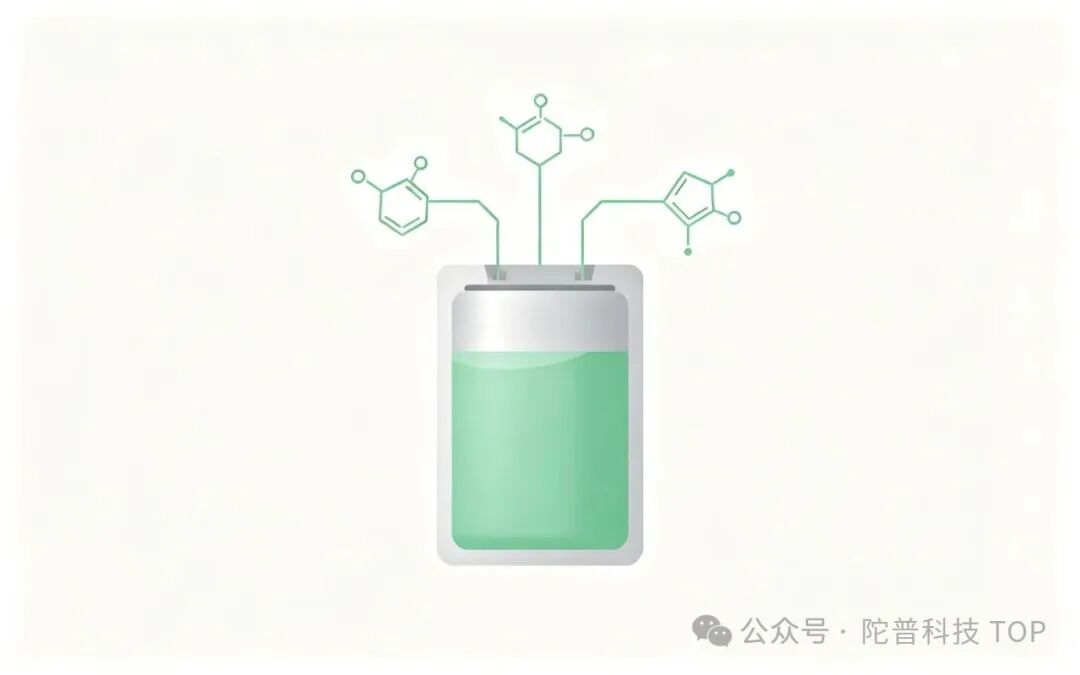
TOP Technology is China’s first company to achieve mass production of lithium-rich manganese-based power batteries. The company has established an integrated, closed-loop materials development system spanning cathodes, anodes, and electrolytes, with all three material technologies advancing toward commercial-scale production and application.
Synergy Across Three Core Materials: Powering the High-Energy-Density Battery Technology Roadmap
1. Lithium-Rich Manganese-Based Cathodes: From Policy Priority to Mass Production
The Plan identifies “high-voltage, high-stability manganese-based cathodes” as a key development direction for advanced electrode materials. TOP Technology is the first company in China to achieve mass production of lithium-rich manganese-based power batteries, having established an integrated materials technology system spanning cathodes, anodes, and electrolytes, with all three core material technologies advancing into batch production.
The specific capacity of TOP’s lithium-rich manganese-based cathode reaches 300 mAh/g, exceeding that of conventional ternary cathode materials. Its cobalt-free, low-nickel formulation contains only 25%–35% nickel, reducing reliance on scarce metals such as cobalt and nickel at the material level.
TOP’s R&D team has made sustained efforts to address the long-standing challenge of voltage decay in lithium-rich manganese-based materials. Through the development of a stable cobalt-free, low-nickel material system, the company is advancing this technology from laboratory research to industrial-scale production.
This approach aligns with the Plan’s objective of developing key materials based on mineral resources with abundant reserves and stable supply.
2. All-Silicon-Carbon Anodes: An Engineered Solution for High Initial Efficiency and Low Expansion
The Plan identifies “silicon-based anodes with high initial Coulombic efficiency and low expansion” as a key area for breakthroughs in anode materials. Silicon-based anodes offer a promising pathway to higher battery energy density, but volume expansion during charge and discharge remains a major obstacle to commercialization.
TOP has independently developed an in-situ solid-electrolyte coating technology that creates a flexible buffering layer on the surface of silicon particles. This layer helps accommodate expansion and contraction during cycling, improving the cycling stability of silicon-based anodes.
The technology has been incorporated into TOP’s high-energy-density battery cells. Combined with lithium-rich manganese-based cathodes, it contributes to a substantial improvement in overall cell energy density.
3. Composite Solid-State Electrolytes: Balancing Safety and Performance
The Plan calls for strengthening the mass-production capabilities of high-performance solid-state electrolyte materials with high ionic conductivity and identifies polymer composite solid-state electrolytes as a key development priority.
TOP has developed an oxide–polymer composite solid-state electrolyte system designed to balance ionic conductivity with interfacial safety. Integrated with the company’s proprietary cathode and anode materials, the system enables coordinated material and cell design.
The system offers favorable air stability and processability, supporting its engineering development and potential for large-scale manufacturing.
4. 460 Wh/kg: From Future Ambition to Mass-Production Reality
The Plan sets a target for all-solid-state batteries to achieve initial large-scale applications by 2030. In the field of high-energy-density batteries, TOP has already established a clear product roadmap:
400 Wh/kg: Stable supply for two years
460 Wh/kg: Battery cells have entered the stage of batch delivery
500 Wh/kg: Experimental validation completed, with mass production planned for 2027
Long-term target: 600 Wh/kg
These products are being developed for applications highlighted in the Plan, including the low-altitude economy (industrial drones and eVTOL aircraft), embodied intelligence (intelligent robots), and high-performance mobility (joint development projects for new energy vehicles).
TOP’s 400 Wh/kg drone batteries have been supplied consistently for two years, positioning the company among the leading suppliers in the high-energy-density battery segment for industrial drones. Its 460 Wh/kg battery cells have also entered batch delivery.
3. New Opportunities for Greater Bay Area Enterprises
In its regional development strategy, the Plan explicitly calls for strengthening the role of the Beijing–Tianjin–Hebei region, the Yangtze River Delta, the Guangdong–Hong Kong–Macao Greater Bay Area, and other regions as engines of high-quality development.
The Guangdong–Hong Kong–Macao Greater Bay Area is emerging as a major growth engine for high-quality development in the new energy industry.
The Plan explicitly calls for strengthening the Greater Bay Area’s role as a driver of high-quality development. TOP Technology is headquartered in Shunde, Foshan, and has established three major bases in China—in Foshan, Huaibei, and Shenyang—with overseas R&D hubs planned in Bulgaria and Singapore.
Academician Nan Cewen of the Chinese Academy of Sciences has emphasized that during the 15th Five-Year Plan period, China’s battery industry must shift its focus from “leading in scale” to “leading in the industry.” Companies that can translate breakthroughs in materials into large-scale commercial delivery first will be best positioned to lead the industry over the next five years.
For TOP Technology, the release of the national plan is not an endpoint, but a new beginning. As national policy priorities align with the company’s technological roadmap and industry trends converge with years of R&D experience, the real test is only just beginning: the companies that first turn materials breakthroughs into large-scale commercial delivery will be best positioned to secure industry leadership over the next five years.
Driving national priorities forward through materials innovation. TOP Technology continues to move forward.
Sources: The 15th Five-Year Plan for the Development of the Next-Generation Battery Industry, jointly issued by seven government departments including the Ministry of Industry and Information Technology (September 2026); People’s Daily; China Securities Journal; China Economic Net.